Independent UK Retailers in 2026: 6 Software Picks That Connect Tills, Stock and Accounts
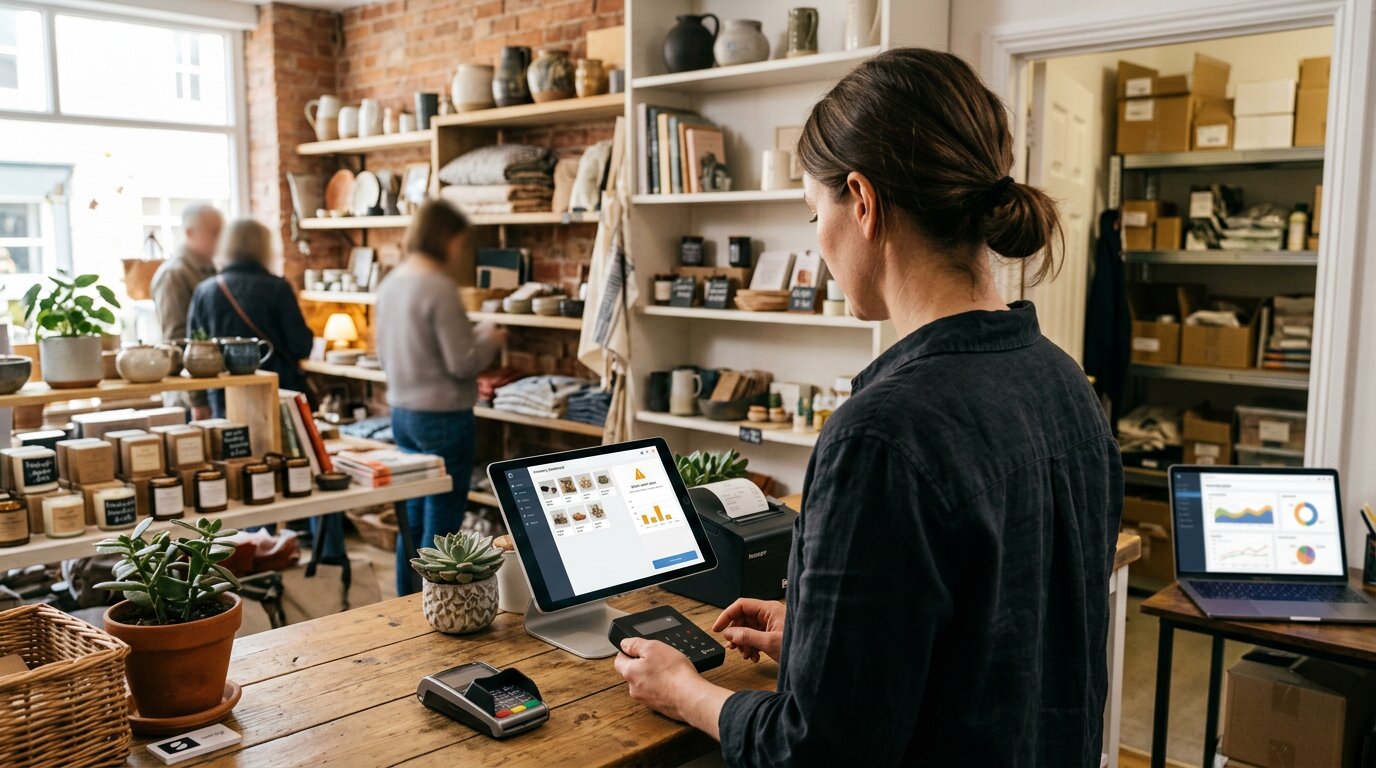
Wearing every hat at once comes with running an independent shop. You serve customers, reorder stock and manage staff, and you try to keep the books straight somewhere in between. Keep the till, the stock list and the accounts in separate places and the gaps fill up with manual work, such as copying takings from end-of-day reports, hunting for stock the system says is there and piecing VAT figures together at the end of each quarter.
With connected systems, most of that rekeying goes, and you gain a clearer view of what is actually selling. Here are six software picks that help independent UK retailers link tills, stock and accounts, starting with the accounting software where everything comes together.
1. Sage Accounting: Linked Sales, Stock and VAT
Sage Accounting offers independent retailers a single place to see sales and costs alongside their bank. It integrates with Square, and each day payment data comes through with a breakdown of sales by product or category, so there is no more keying in takings from end-of-day reports. Automatic bank feeds bring in transactions, which makes reconciliation far quicker.
On the Plus plan, the products you buy and sell are tracked alongside your accounts by stock and inventory management. Square sales can flow digitally into Sage Accounting, which means there's less manual rekeying. Using those records, Sage Accounting can then calculate and submit an MTD-compatible VAT return to HMRC, provided the business's VAT records and digital-link requirements are met.
2. Shopify: Running an Online Shop Alongside Your Store
Many independent retailers now sell in-store and online, and keeping two sets of stock figures in step is a common headache. Shopify gives you an online shop that, when you use Shopify POS, can share inventory with your physical store, so either a web sale or a shop sale reduces the same stock count.
Shopify's sales and tax reports give you clear, consistent figures for your online channel even if your till is separate. That makes it far easier to bring web sales into your accounts accurately, and local pickup options help turn online browsers into shop visitors.
3. Klaviyo: Email and SMS Based on Purchases
The customers who come back are the lifeblood of an independent shop. Using purchase data, Klaviyo, an email and SMS marketing platform, sends messages that feel relevant, such as a back in stock reminder for a favourite item or new arrivals in a category someone has bought from before.
Generic newsletters tend to be less welcome than messages based on real buying behaviour. Automated flows such as a thank you after a first purchase, or a nudge to customers who have not visited for a while, keep you in touch and do not add to your workload.
4. Square: The EPOS and Card Payment System
The heart of a connected shop is a modern EPOS system. Square pairs a till app and card readers with an online dashboard, so the item, price, payment method and time of every sale are recorded, rather than a single total at the end of the day.
Square's item library keeps track of stock as you sell, with low stock alerts on items running short, and sales reports highlight your best sellers and busiest hours. With that level of detail, accurate stock control and reliable accounting become possible further down the line.
5. Zapier: Linking Apps Without Code
Not all of the apps a shop uses connect directly with each other. Zapier lets you link apps without any coding so that data moves automatically when something happens, whether a new online order, a low stock alert or a new customer sign-up.
Retailers use it for tasks like sending new customers from the online shop to an email list, posting low stock alerts to a team chat or logging orders in a shared spreadsheet. Small manual tasks disappear with each automation, and together they add up to real time saved every week.
6. Faire: Simpler Wholesale Stock Ordering
Reordering from dozens of small suppliers and finding new products can eat into time you would rather spend in the shop. Faire is a wholesale marketplace where independent retailers connect with brands, so you can browse, compare and order stock from many suppliers in one place.
Keeping orders in a single account, rather than scattered across emails, makes it easier to check deliveries against what was ordered and to keep purchase records tidy. Payment terms available to eligible retailers can also give you time to sell stock before you pay for it.
The Difference Connected Systems Make
It shows up in the everyday jobs that used to eat into your evenings.
End of day: Before, you add up takings by hand and key them into the accounts. After, sales flow through automatically, already broken down by product.
Stock: Before, you hear that an item has sold out when a customer asks for it. After, a reorder is prompted in time by low stock alerts.
Online and in store: Before, a product sells online after it has already gone from the shelf. After, the two channels draw on one stock count.
The VAT quarter: Before, reconciling spreadsheets for the return takes a weekend. After, the figures are already in your accounts and ready to check and submit.
Marketing: Before, the same newsletter goes to everyone. After, customers hear about the products they actually buy.
Questions Retailers Often Ask
Can my till send sales straight into my accounts?
Many EPOS systems can, using a direct integration. As an example, Sage Accounting integrates with Square, bringing through each day's sales broken down by product or category, so there is no retyping of takings.
Do I still need stock software if my EPOS tracks inventory?
Often not, above all for a single shop. EPOS stock tracking combined with stock records in your accounting software covers most needs. Dedicated stock software tends to become worthwhile if you run several locations or warehouses.
How do I make sure stock is accurate across my shop and website?
Choose a single system to act as the master record for stock, then connect your other channels to it so every sale reduces the same count. Regular spot checks on fast-selling lines will pick up any differences before they grow.
Is a sales import from my till treated as a digital link for VAT?
Yes, so long as the data moves between systems digitally, by integration or imported file, rather than being retyped by hand. Sage Accounting can then submit your VAT return to HMRC from those records under Making Tax Digital.
|






